
TORN
TORN LTDRole Playing
4.42.86K Reviews
- Version
- 2.3.37
- Installs
- 1.00M
- Age Rating
- Mature 17+
Screenshots
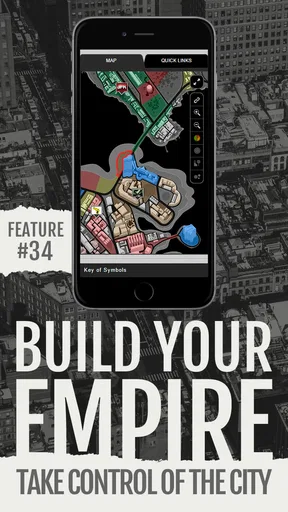

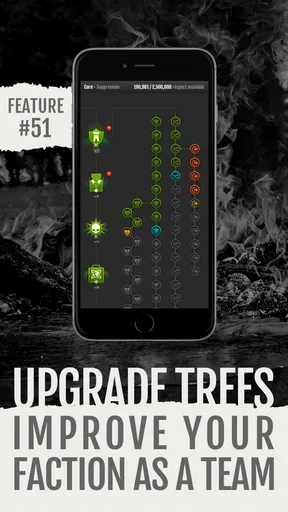
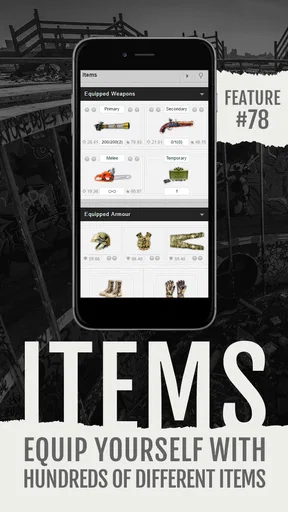
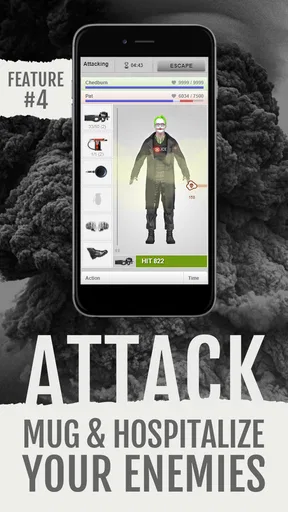
Our Review of TORN
 Analysis by Appyee
I approached TORN expecting a text-heavy role-playing game that would work more like a long-running online routine than a traditional mobile adventure. That expectation turned out to be important. This is not a game built around flashy combat scenes, constant animation, or a carefully staged single-player campaign. Its appeal comes from making decisions inside a persistent crime-themed world, managing your time, building a character, and finding a place among other players.
My overall view is that TORN is unusually good at turning small choices into a continuing personal story. It asks you to think about what to do next rather than simply react to whatever appears on screen. At the same time, its slow pace, dense interface, mature subject matter, and dependence on long-term commitment will put off anyone looking for an immediately accessible mobile RPG. It is best understood as an online text RPG you live with, not a quick game you finish in short bursts.
Why this crime RPG feels different from ordinary mobile games
TORN comes from TORN LTD and sits in the role-playing category, but it does not follow the familiar mobile formula of collecting a team, tapping through battles, and watching a stream of rewards. The central experience is closer to participating in a large online society. Crime, money, personal progress, clans, and rivalry shape the atmosphere, while the text-based presentation leaves room for the player to imagine the world rather than receive every detail through graphics.
That design gives the game a distinctive rhythm. I often found myself checking what action made sense next, starting an activity, and then returning later to continue the plan. A short visit can be useful, but the deeper satisfaction comes from gradually understanding how the different parts of your character and social life fit together. It rewards patience more than reflexes.
The mature 17+ rating is a meaningful part of the identity rather than a decorative label. The setting revolves around crime and adult themes, so this is not the kind of role-playing game I would recommend for younger players or for anyone wanting a light, family-friendly fantasy world. The tone is intentionally rougher and more cynical than the colorful heroes and harmless quests common in mobile stores.
It is also free to start, which makes trying the basic experience straightforward. The game includes purchases ranging from $1.49 to $194.99 per item, so I would approach the store carefully and decide in advance how much, if anything, I am comfortable spending. The free entry is useful, but the presence of expensive individual items means players should not treat every offer as automatically necessary for progress.
A game built around decisions instead of spectacle
The strongest quality here is the way text creates room for planning. In a graphical RPG, visual effects often tell me that something exciting happened. In TORN, the important question is usually what an action means for my longer-term position. That makes ordinary choices feel more deliberate: I am not just clearing a stage, I am shaping a routine and deciding which direction deserves my attention.
This is particularly effective for people who enjoy systems, menus, and gradual improvement. I can imagine a player opening the game during a commute, checking available actions, making a choice, and returning later to reassess the situation. The game fits that kind of fragmented schedule better than a real-time action title that demands uninterrupted concentration.
There is a trade-off, though. The text-first approach can feel visually plain, especially if you compare it with mainstream role-playing games designed around animated battles and dramatic cutscenes. TORN asks me to supply some of the atmosphere myself. If the pleasure of an RPG comes mainly from seeing a beautiful world, controlling a character directly, or discovering cinematic story moments, this will probably feel too restrained.
Progress works best when I treat it as a routine
One of the less obvious lessons is that the game becomes easier to understand when I stop asking, “What can I do right now?” and start asking, “What kind of player am I building over the next several sessions?” That change in mindset helps prevent random decision-making. Instead of scattering attention across every available option, I can choose a direction and let smaller actions support it.
For a new player, I would recommend keeping a simple personal note during the first few sessions. Write down which activities you are testing, what you are saving toward, and what kind of interaction you actually enjoy. This is not because the game requires outside tools, but because a persistent online RPG can make early choices feel disconnected when everything is unfamiliar. A short record turns vague experimentation into a visible plan.
Another useful habit is to avoid judging the game by the first visit alone. TORN has the feel of a broad environment rather than a compact tutorial followed by a clearly defined ending. The early stage is more about learning its language and finding a comfortable routine. Players who expect immediate mastery may mistake the learning curve for a lack of content.
The social layer changes the value of individual choices
The reference to clans is not just a theme detail. A game like this becomes more interesting when personal progress exists alongside group identity. Joining a community can give actions more meaning, because decisions are no longer only about my own account. They can affect how I cooperate, compete, or present myself within the wider world.
I would not rush into social commitments simply because they are available. First, I would spend enough time learning the basic rhythm to understand what kind of participation I can maintain. A highly active group may be a poor fit for someone who only checks in occasionally, while a relaxed community may suit a player who prefers conversation and gradual involvement. The practical insight is that choosing the right social environment matters almost as much as choosing an individual direction.
This is also where TORN differs from many offline RPGs. In a conventional single-player game, I can pause the experience, reload a save, or follow a story at my own speed. Here, the surrounding player community gives the world a sense of continuity, but it also makes the experience less private and less predictable. That can be exciting for someone who wants an evolving online setting, and tiring for someone who wants complete control.
What the mobile format does well
The text-based presentation is a practical advantage on a phone. I do not need the device to deliver a constant stream of detailed visuals for the game to remain engaging. That makes it easier to check in when I have a few minutes, and it reduces the pressure to sit through a long action sequence every time I open the app.
That convenience should not be confused with simplicity. A game can be easy to open while still requiring concentration once I am inside it. TORN has enough breadth that casual checking and serious planning are both possible, but they are not the same experience. A quick visit may maintain a routine; a longer session is more useful for understanding options, reading carefully, and making deliberate decisions.
The current version is 2.3.37, and the listed minimum operating system is Android 6.0. That makes the compatibility requirement relatively approachable for many Android users, though the actual comfort of play will still depend on the device, screen size, and personal tolerance for information-dense interfaces. I would especially recommend trying it on the phone you use most often, because convenience is central to whether this type of game becomes a habit.
Where the experience creates friction
My main criticism is that TORN can feel demanding before it feels welcoming. Text menus and persistent systems are powerful, but they do not automatically explain themselves in the intuitive way a visually guided RPG might. A player who wants to understand the purpose of every option immediately could become frustrated by the amount of context that has to be learned.
The slow pace is another genuine limitation. The game is designed around continuing progress, not constant dramatic payoff. That makes it suitable for planning and routine play, but less suitable for a lunch break when I want a complete challenge, a satisfying battle, or a clear conclusion in a few minutes. If your usual mobile choice is a fast puzzle game or an action RPG with instant feedback, TORN may initially feel like work.
The social setting can add pressure as well. Online communities are rewarding when I find people who share my pace and interests, but they can make the game feel more complicated than a solo experience. Players who dislike negotiation, competition, or the possibility of being drawn into group expectations should consider that before investing heavily in the world.
The purchase range also deserves a calm, practical warning. Free access is a strong reason to test the game, but the high end of the individual purchase range is substantial. I would not spend money simply to solve the discomfort of not yet understanding the systems. First learn what you enjoy, decide whether the game has earned a place in your routine, and only then consider whether an optional purchase is worth it to you.
Who should try it, and who should skip it
I would recommend TORN to players who enjoy text adventures, online communities, resource decisions, and slow character development. It is a particularly good match for someone who likes checking a game several times throughout the day, making a plan, and watching that plan develop. Fans of old-school role-playing design may appreciate its willingness to let systems and player choices carry the experience instead of relying on spectacle.
It is also a strong option for people who want a mobile game that can remain interesting over a long period without demanding constant action. The persistent setting gives each session a sense of connection to the last one. I can stop after making a decision and return later without needing to remember a complicated sequence of combat inputs.
I would suggest skipping it if you need a clearly directed story, polished visual presentation, or immediate rewards. It is not the best choice for children because of the mature rating and crime-focused setting. I would also steer away from it if you dislike games that can become part of your daily routine. Some players want an app they can finish and put down; this is more likely to keep presenting reasons to return.
Compared with a standard mobile RPG, TORN gives up visual drama in exchange for a broader sense of personal agency and continuity. Compared with a simple text adventure, it aims for a more populated, ongoing online environment rather than a short, self-contained narrative. Neither comparison makes it universally better. It is better for players who value persistence and interaction, while a conventional RPG is better for someone who wants a guided journey with a definite ending.
What new players should do first
My advice is to begin slowly and resist the temptation to treat every available choice as equally urgent. Read the descriptions, notice which actions fit your preferred play schedule, and choose a small goal that can be evaluated after several visits. The point is not to optimize immediately; it is to learn which parts of the world hold your attention.
Use short sessions to maintain your routine, but reserve occasional longer sessions for reviewing your direction. This two-speed approach works better than trying to play every visit with the same intensity. It also helps reveal whether you enjoy the underlying game or merely the novelty of opening a new account.
When considering a clan or other social involvement, look for a group whose expectations match your availability. A community that assumes constant participation can turn an enjoyable game into an obligation. Finding a comfortable pace early is one of the most useful decisions a new player can make.
Finally, keep purchases separate from basic understanding. The game is free, so I would use that opportunity to learn its structure before spending. If the text-driven world, long-term planning, and social layer already appeal to you, optional spending becomes a personal choice rather than a way of trying to make the game enjoyable.
My verdict after settling into its rhythm
TORN is an unusual role-playing game because its strongest moments come from accumulation: a decision made earlier, a routine that starts to make sense, and a growing feeling that the account represents a direction I chose. It does not need flashy presentation to create involvement, but it does require me to meet it halfway.
The game has earned a 4.4 average from around 20K ratings, with over 1M installs, which fits the impression of a niche experience that has reached a substantial audience. Those figures do not make it automatically suitable for everyone, but they do reflect that the concept has found players who enjoy its particular combination of crime-themed role-playing, text-based systems, and online persistence.
My recommendation is clear but specific: try it if you want a mature, long-running mobile RPG that rewards patience, planning, and social awareness. Do not choose it expecting an animated adventure or a quick sequence of battles. For the right player, TORN can become a surprisingly absorbing daily world; for the wrong player, its menus, pace, and adult setting will feel like barriers rather than depth.
Released on May 8, 2018, it has the character of a game designed to be revisited rather than consumed in one sitting. I would give it a fair trial without spending, establish a manageable routine, and then decide whether its persistent crime-world structure fits the way you actually like to play. My final judgment is that TORN is worth trying for thoughtful online RPG fans, but only if you are willing to trade instant spectacle for long-term involvement.
Verdict
Strengths of TORN
- Fast-paced battles are easy to start and difficult to master.
- A large player community keeps the world active around the clock.
- Many progression paths let you specialize your character.
- Regular events provide extra goals beyond routine activities.
- The browser-style interface works smoothly on most modern phones.
Limitations of TORN
- Progress can feel slow without frequent play or careful planning.
- The amount of information may overwhelm newcomers at first.
- Some activities depend heavily on timers and waiting periods.
- Competitive players may gain advantages through optional purchases.
- The text-heavy design may not appeal to fans of action-focused games.
Similar Picks in This Category
View All
Hair Dye
CrazyLabs LTD4.4

Monster High™ Beauty Salon
CrazyLabs LTD4.5

Bus Simulator - Bus Games 3D
Jima Apps4.4

Flight Pilot: 3D Simulator
Wildlife Studios4.1


Super Stylist Fashion Makeover
CrazyLabs LTD4.4
Frequently Asked Questions
What is TORN and what can I do in the game?
TORN is a text-based multiplayer role-playing game set in a large virtual city where players build their own criminal empire and social identity. After creating a character, you can work different jobs, train your statistics, trade items, buy property, join factions, participate in crimes, fight other players, and manage a range of long-term activities. Progress is gradual, so the game is better suited to players who enjoy planning and regular interaction rather than fast action.
Is TORN free to download and play?
TORN can be played without paying, although it includes optional purchases and premium features that may speed up progress or provide additional convenience. The core experience is based on patience, daily activity, and smart resource management, so free players can still develop strong characters over time. Before downloading, users should review the current store listing and in-game purchase information, since available options and prices may change.
Does TORN require an internet connection?
Yes, TORN is primarily an online game and requires an active internet connection for most of its features. Character progress, combat, trading, faction activities, messages, and the in-game economy depend on communication with the game servers. It is not designed as a traditional offline role-playing game, so players should expect to use mobile data or Wi-Fi whenever they want to access their account and perform important actions.
Is TORN suitable for children and younger players?
TORN is generally aimed at mature players because its setting includes crime, violence, drugs, gambling, combat, and other adult-themed subjects. The community-driven nature of the game also means that players may encounter user-generated messages and discussions that are not appropriate for children. Parents should check the official age rating, privacy information, and purchase settings before allowing a younger user to install or access the game.
What should new players know before starting TORN?
New players should understand that TORN has a slow, persistent progression system and rewards consistency more than quick sessions or reflexes. It is helpful to learn how energy, nerve, happiness, travel, rehabilitation, combat, and the economy work before spending valuable resources. Joining an active faction or community can make the early game easier, while reading guides and avoiding impulsive trades can prevent costly beginner mistakes.
Play our best games!


